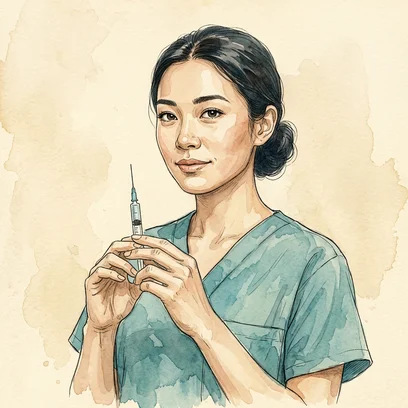
Vaccine Vivian
Immunizations: Live Vaccines, Real Contraindications and the Reactions to Expect
Written lecture — video coming
The memory hook
A low fever is not a reason to skip a shot — but pregnancy and a suppressed immune system change everything
The story
Vivian checks two things before any live vaccine: is she pregnant, and is this immune system able to handle it?
Vivian worked as a public health nurse in a bustling community immunization clinic, earning her nickname for the calm, encyclopedic confidence with which she answered every anxious parent's question about shots, schedules, and side effects. Colleagues joked she could recite the entire immunization schedule in her sleep, but her real gift was explaining the science simply: vaccines train the immune system to recognize a threat without causing the actual disease. Inactivated vaccines contain no living organism and are therefore safe even in significant immunosuppression, but live attenuated vaccines contain weakened organisms that must replicate briefly inside the body to trigger full immunity, and that very replication is exactly what makes them dangerous during pregnancy or meaningful immune suppression, when the body cannot reliably contain even a weakened pathogen.
One afternoon Vivian is reviewing the immunization history of a young woman who has come in requesting her measles, mumps, and rubella vaccine before starting a new job that requires proof of immunity. During the intake interview, Vivian asks routine screening questions and learns the woman's last menstrual period was over six weeks ago and she has not used contraception recently, information the woman herself had not connected to her vaccine appointment at all. Separately that same day, Vivian is scheduling routine childhood vaccines for a toddler whose grandmother mentions, almost in passing, that the child's older sibling is currently undergoing chemotherapy for leukemia and lives in the same household, a detail the intake form had not specifically asked about.
Vivian recognizes both situations as critical decision points requiring immediate clarification rather than routine administration. She confirms with a rapid urine pregnancy test that the young woman is indeed pregnant, meaning the live MMR vaccine is absolutely contraindicated because the weakened rubella component in particular carries known risk to a developing fetus. With the toddler, Vivian pauses before administering the intranasal influenza vaccine that had been planned for that visit, because it too is a live vaccine, and while the toddler herself is healthy, the immunosuppressed sibling at home creates meaningful risk if viral shedding were to occur in the household. Neither client had a fever or mild illness that day, which Vivian notes would not have been a valid reason to delay vaccination anyway.
Vivian responds by withholding the MMR vaccine entirely for the pregnant client, counseling her clearly that she should avoid pregnancy for approximately four weeks after eventually receiving any live vaccine and that she can safely receive it once she is no longer pregnant or breastfeeding restrictions are cleared. For the toddler, Vivian selects the inactivated injectable influenza vaccine instead of the live intranasal version, protecting both the child and her immunosuppressed sibling at home without denying either child needed protection. She observes both clients for the standard fifteen minutes after any vaccine is given, keeping epinephrine readily available at her station, and she documents her screening thoroughly, reinforcing to both families that mild soreness, low fever, and fussiness for a day or two afterward are expected, not dangerous.
The setup
A parent asks whether the visit should be rescheduled because the toddler has a runny nose and a temperature of 99.8.
The turn
In the next room, a woman who is 10 weeks pregnant is due for MMR.
The crisis
A child on chemotherapy is scheduled for varicella vaccine.
The save
Vivian teaches every family the same after-visit plan: soreness and a low fever are expected; trouble breathing, hives or swelling means emergency care.
Already a member? Sign in