Memorial Grace is not a big hospital. It is a tired brick teaching hospital on the edge of a small city, the kind with an elevator that groans between floors and a cafeteria that runs out of soup by seven. What makes it unusual is not the building. It is that every patient who walks through its doors carries one concept — one single, high-yield, exam-worthy idea — inside their body, and they carry it so plainly that once you have met them, you cannot unsee it.
That is the whole idea behind the Memory Team. Nursing school hands you thousands of facts stacked flat on a page: lab values, priority actions, contraindications, black-box warnings. Flat facts fall out of your head under exam pressure. People do not. You remember the man who could not stop breathing deeply and smelled faintly of nail polish remover. You remember the woman whose blood pressure climbed while her reflexes went wild. Memory is built for faces, smells, rooms and stories, and the NCLEX is built for judgment. The Memory Team sits exactly where those two things meet.
So the characters of Memorial Grace are not decoration. Each one is a container. Their name gives you the concept, their story gives you the pathophysiology, their symptoms give you the assessment findings, and the moment their nurse steps in gives you the priority action the exam is actually testing. Learn the person and you have quietly learned the content — including the part most students lose first, which is what to do first.
The hospital runs on shifts, and the story does too. Below, walk the units the way a new nurse would on orientation week: start in Endocrine, where the chemistry of the body goes wrong in the most measurable way, and finish on the floors where the smallest signs matter most.
Unit 3 — Endocrine & Metabolic: the chemistry floor
Every nurse at Memorial Grace starts on Unit 3, because Unit 3 teaches you to read the body as chemistry. The patients here are not subtle. Their pH, their potassium, their sodium and their calcium are written across their faces, their reflexes and their breathing pattern before a single lab result comes back.
Acidotic Andy is the first person you meet, because Andy teaches you the alarm sound of the whole hospital: deep, tireless breathing and the sweet smell of ketones. Once Andy makes sense, every acid–base question afterward becomes an argument between him and Alkalotic Alice, and between Panicking Pam, who blows off too much carbon dioxide, and the retaining patients upstairs on Respiratory who cannot blow off enough.
Electrolytes live on this floor too, and they come in pairs on purpose. High and low potassium, high and low sodium, high and low calcium — the exam almost never asks you a value in isolation. It asks which direction the patient is drifting and what that drift does to a heart, a muscle or a brain. Then the hormone patients arrive: the ones whose glands are shouting and the ones whose glands have gone silent.
 Acidotic AndyKussmaul breathing and ketone breath: metabolic acidosis.
 Alkalotic AliceVomiting away her acid until her muscles twitch: metabolic alkalosis.
 Panicking PamBreathing too fast, tingling fingers: respiratory alkalosis.
 Potassium PetePeaked T waves and a heart that can stop: hyperkalemia.
 Low-K LenaFlat, weak and cramping, with U waves: hypokalemia.
 Salty SalThirsty, dry and restless: hypernatremia.
 Diluted DanaWater-logged and confused: hyponatremia and SIADH.
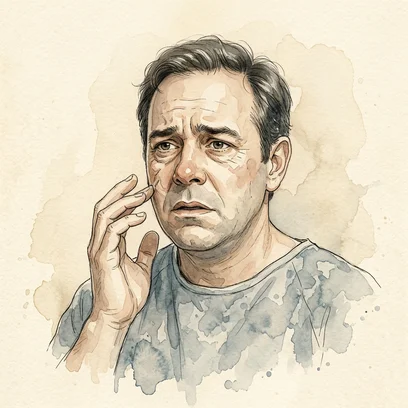 Chvostek ChuckA tapped cheek that twitches: hypocalcemia.
 Stony StellaBones, stones, groans and moans: hypercalcemia.
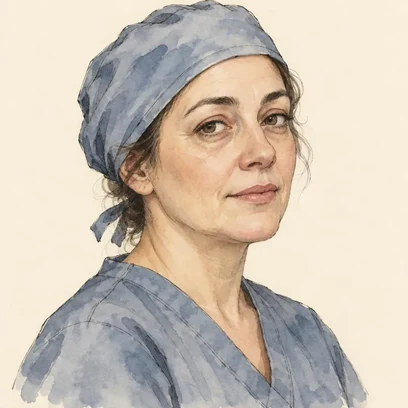 Magnesium MaggieReflexes that vanish or run wild: magnesium imbalance.
 Ketone KyleFluids, then insulin, then potassium: DKA.
 Hyperosmolar HankSky-high glucose without the ketones: HHS.
 Storming ToriFever, tachycardia and agitation: thyroid storm.
 Sluggish MyraCold, slow and barely rousable: myxedema coma.
 Addison AdaHypotension and hyperkalemia in crisis: adrenal insufficiency.
 Cushing CoraToo much cortisol, head to toe: Cushing's syndrome.
 Dry DwayneLitres of dilute urine: diabetes insipidus.
Unit 4 — Respiratory: the floor that watches the numbers fall
One floor up, everything is about air moving in and air moving out. Retaining Ray is the anchor here: the mirror image of Andy, sleepy and flushed because carbon dioxide is building up rather than acid pouring in. Standing next to each other, the two of them settle almost every acid–base question the exam can write.
The rest of Respiratory is a lesson in urgency. Some patients get worse slowly and predictably. Others fall off a cliff, and the exam wants to know whether you can tell which is which — and whether you reach for oxygen, positioning, a bronchodilator, an isolation room or a rapid response.
 Retaining RaySleepy and hypercapnic: respiratory acidosis.
 Barrel BartPursed lips and a barrel chest: COPD.
 Wheezing WandaA silent chest is the emergency: asthma exacerbation.
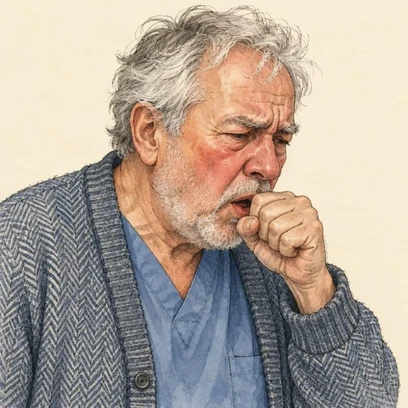 Consolidated CarlCrackles, fever and a productive cough: pneumonia.
 Coughing KipNight sweats and airborne precautions: tuberculosis.
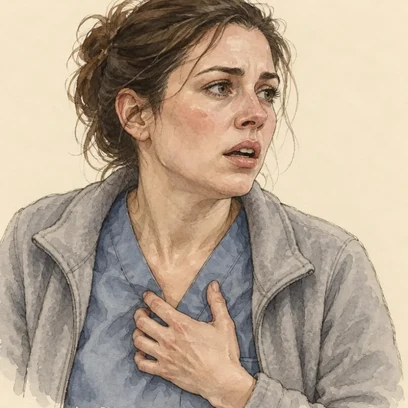 Embolic EmmaSudden dyspnea and chest pain: pulmonary embolism.
 Rigid RitaRefractory hypoxemia and stiff lungs: ARDS.
 Vented VinceAlarms that mean something specific: mechanical ventilation.
Unit 5 — Cardiovascular: pressure, pump and perfusion
Cardiovascular is where Memorial Grace teaches priority. Three patients arrive shocked in three different ways — one because the tank is empty, one because the pump has failed, one because the pipes have dilated — and the treatment for one would harm the others. Learn them as a trio and shock questions stop being guesswork.
The chronic patients on this unit teach the other half of the exam: recognising the slow slide, teaching the patient before discharge, and knowing which lab you check before which drug goes in.
 Bleeding BeaEmpty tank, thready pulse: hypovolemic shock.
 Pumpless PaulThe pump has quit: cardiogenic shock.
 Septic SamWarm then cold, lactate rising: distributive shock.
 Infarcting IvanTime is muscle: myocardial infarction.
 Failing FrankWeight gain, crackles and orthopnea: heart failure.
 Fibrillating FayIrregularly irregular and clot-prone: atrial fibrillation.
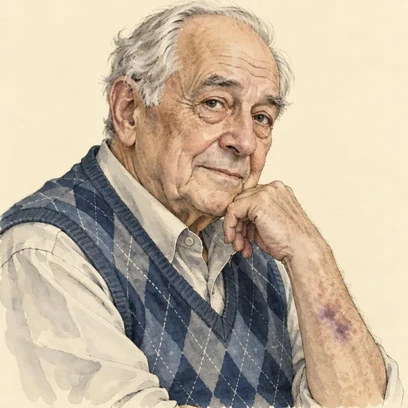 Warfarin WallyINR, vitamin K and bleeding precautions: anticoagulation.
Unit 6 — Neurological: the floor where minutes are the treatment
Neuro is the quietest unit and the fastest one. Its patients rarely shout for help; they change a little, and the nurse who notices the change is the treatment. Pressure, perfusion and airway drive nearly every question written about this floor.
The chronic neurological patients teach a different skill entirely: protecting a body that cannot protect itself, and timing medication so a person can still swallow, still breathe, still stand.
 Pressured PriyaWidening pulse pressure and a falling heart rate: rising ICP.
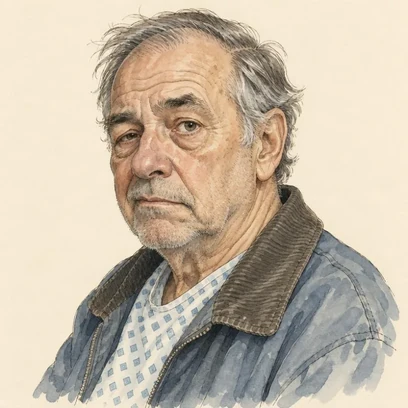 Stroke StanLast known well, then CT: ischemic stroke.
 Seizing SimoneSide-lying, timed and protected: status epilepticus.
 Reflexive RexSit him up and find the trigger: autonomic dysreflexia.
 Myasthenic MargeWeakness that worsens with use: myasthenic crisis.
 Climbing GaryWeakness climbing toward the diaphragm: Guillain-Barré.
 Tremor TomasRigidity, shuffling and dosing on time: Parkinson's disease.
Unit 7 — Gastrointestinal & Renal: filters and plumbing
This unit teaches the body's clean-up systems. When the liver stops clearing ammonia, the personality changes before the labs do. When the kidneys stop, potassium and fluid rise until the heart is in danger. When the gut stops, everything upstream backs up.
Nearly every question from Unit 7 is really an intake-and-output question, a potassium question or a bleeding question dressed in different clothes.
 Ammonia AmyConfusion and asterixis: hepatic encephalopathy.
 Anuric AlanUrine output falls, potassium climbs: acute kidney injury.
 Pancreatic PabloBoring epigastric pain, NPO and rest: acute pancreatitis.
 Tarry TaraBlack stools mean upper GI bleeding.
 Blocked BrunoDistension and high-pitched then absent bowel sounds: obstruction.
Pharmacy corridor — the drugs that bite back
Between the units runs the pharmacy corridor, where three patients live permanently because their emergencies are caused by the treatment rather than the disease. They exist to teach one habit: check the patient, then the level, then the antidote.



Fourth floor — Maternal & Newborn: two patients in one bed
Maternity is the only unit where every assessment counts twice. The mother's blood pressure, the placenta's position, the cord's position and the fetal heart tracing all decide the same thing: whether this stays a delivery or becomes an emergency.
The newborn side of the hall adds a second rule the exam loves — the smallest patients decompensate quietly, and the earliest sign is almost never dramatic.
 Preeclamptic PennyRising pressure, brisk reflexes, magnesium running: preeclampsia.
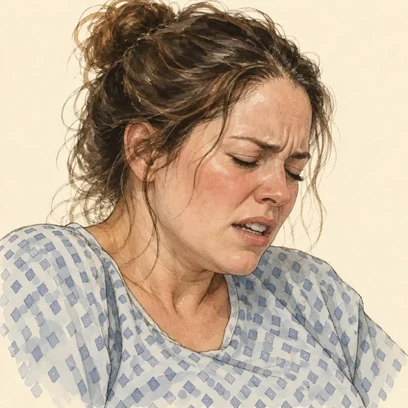 Decel DinaLate decelerations mean reposition and act: fetal monitoring.
 Previa PaulaPainless bright red bleeding, no vaginal exam: placenta previa.
 Abrupting AbbyPainful, rigid uterus: placental abruption.
 Cord CallieLift the presenting part off the cord: cord prolapse.
 Gushing GwenBoggy uterus, massage first: postpartum hemorrhage.
 Feverish FionaFever after delivery: postpartum infection and mastitis.
 Sugary SelenaA big baby and tight glucose control: gestational diabetes.
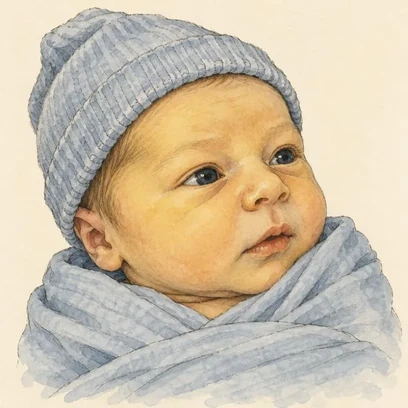 Yellow YusufBilirubin, lights and feeding: newborn jaundice.
The behavioral health wing — safety first, always
The behavioral health wing sits behind its own set of doors, and its questions follow one rule above all others: assess risk, then keep the person safe, then treat. The characters here carry the medication emergencies too, because in mental health the drug and the diagnosis are often inseparable.
 Sinking SadieAsk about the plan directly: depression and suicide risk.
 Manic MiaLithium level, sodium and hydration: bipolar mania.
 Voices VictorEPS, NMS and tardive dyskinesia: antipsychotic side effects.
 Sober SullyTremor at 24 hours, seizures after: alcohol withdrawal.
 Narcan NatePinpoint pupils and shallow breathing: opioid overdose.
 Serotonin SylviaClonus, fever and agitation: serotonin syndrome.
 Flashback FelixGrounding before insight: PTSD and panic.
 Mirror MilaWatch phosphorus when refeeding: anorexia nervosa.
Second floor — Pediatrics: small patients, loud clues
Peds is where the exam tests whether you know normal. A barking cough, a wet diaper count, a strawberry tongue or a knee drawn up to the chest tells you more than any monitor. Every character on this floor is built around one unmistakable, describable sign.
 Barking BennySeal-like barking cough and stridor: croup.
 Wheezy WinnieInfant wheeze and contact precautions: RSV bronchiolitis.
 Droopy DaniSunken fontanel and few wet diapers: infant dehydration.
 Telescope TommyCurrant jelly stool and drawn-up knees: intussusception.
 Sickled SimonHydration, oxygen and pain control: sickle cell crisis.
 Cystic CassieEnzymes with every meal, airway clearance daily: cystic fibrosis.
 Strawberry KaiFever, rash and cardiac follow-up: Kawasaki disease.
 Leaded LiamOld paint, developmental slips, chelation: lead poisoning.
Isolation hall — Safety & Infection Control
The isolation hall is where MnemoNurse teaches the questions students most often lose points on: which precaution, which room, which patient can share it, and when to stop an infusion. The characters here are less about disease and more about the nurse's judgment around it.




The ICU — where two systems fail at once
At the far end of the hospital, the ICU holds the patients whose problems cascade. These are the late-stage, multi-system questions: labs that move together, bleeding and clotting at the same time, cells breaking open faster than the kidneys can clear them.


The clinic — Health Assessment and the slow findings
The outpatient clinic closes the tour. Its patients are the ones you would miss if you only watched monitors: fatigue with pale conjunctiva, a rash that flares in sunlight, pain that keeps rising under a cast. They teach the exam's quietest skill — believing a finding before a machine confirms it.



How to use the Memory Team
That is the whole hospital. Eighty-one people, one concept each, arranged so that the ones most easily confused stand next to each other on purpose — Andy against Alice, Pete against Lena, Previa against Abruption, the three shocks in a row.
Use the story the way a nurse uses a shift report. Read a character once for the narrative, then let the concept do the work later, when a question describes a patient and you feel a flicker of recognition before you have consciously reasoned anything. That flicker is the point. It is faster than recall and steadier under pressure, and it is why the Memory Team exists.
When a question stumps you on exam day, do not hunt for the fact. Find the person. Ask which room they would be in at Memorial Grace, who is in the bed next door, and what their nurse did first. The answer is usually standing right there.