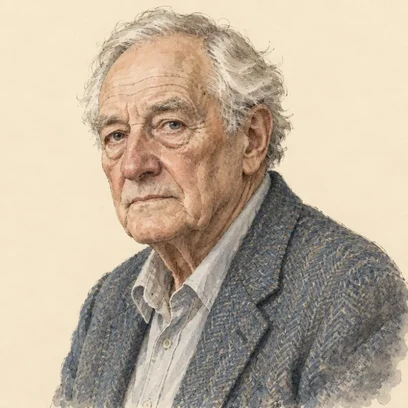
Tremor Tomas
Parkinson's Disease
Written lecture — video coming
The memory hook
Resting tremor, rigidity, bradykinesia — time levodopa exactly, never abruptly stop it
The story
Tomas's hand trembles at rest but calms when he reaches for his coffee cup. His steps have become short and shuffling, and he struggles to start walking through a doorway.
Tomas was once a master watchmaker, a man whose life revolved around microscopic precision, delicate balance, and fluid grace. Now in his late sixties, his name Tremor Tomas reflects the cruel neurodegenerative shift occurring deep inside his midbrain. Deep within his substantia nigra, the dopaminergic neurons responsible for smooth motor planning are progressively degenerating. This chronic loss of dopamine starves the basal ganglia, leaving acetylcholine unchecked and creating an involuntary state of motor discord. Tomas, always composed and gentle, finds himself trapped behind an expressionless face as his internal timing gears begin to strip. His name serves as a stark reminder of dopamine depletion, where the smooth transmission of movement commands is replaced by resistance, hesitation, and an unrelenting rhythmic tremor whenever his hands rest idle on the wooden workbench.
The decline arrived slowly, masquerading as normal aging. Risk factors such as advanced age and subtle environmental exposures silently eroded his dopamine reserves over several years. Long before anyone noticed his physical impairment, Tomas observed tiny shifts in daily routine. His once elegant, sweeping handwriting gradually shrank into illegible, cramped scribbles known as micrographia. Family members noted that his expressive eyes and warm grin had vanished behind masked facies, a blank and unblinking stare that made him appear detached. His vibrant conversational tone softened into a low, monotone whisper. He brushed aside the growing stiffness in his neck and shoulders, mistaking it for arthritis. By the time over eighty percent of his substantia nigra neurons had perished, the compensatory mechanisms failed, and subtle clumsiness gave way to undeniable physical impediment.
The true crisis unfolded on a Tuesday morning when Tomas attempted to walk through his workshop doorway. His body abruptly froze mid-stride, feet glued to the floorboards as his torso leaned precariously forward. When he tried to force a turn, his balance collapsed, resulting in a terrifying fall. A full clinical examination revealed the classic Parkinsonian triad. At rest, his right hand exhibited an involuntary, rhythmic pill-rolling tremor at four to six hertz, which distinctly ceased the moment he reached forward to grasp a glass of water. Passive flexion of his elbow demonstrated unmistakable cogwheel rigidity, catching like jerky cogs. Bradykinesia severely slowed his attempts to stand, and his gait was classic: stooped, shuffling, and festinating with diminished arm swing. Because no definitive laboratory test exists, his diagnosis rested entirely on clinical findings.
The nurse immediately instituted strict fall precautions, placing Tomas close to the nurses' station and clearing walking pathways of rugs and clutter. The priority pharmacologic intervention was levodopa-carbidopa administered orally on an exact, unyielding schedule. The nurse carefully timed his doses sixty minutes before meals, ensuring dietary proteins would not compete with the drug across the blood-brain barrier. During physical assessment, the nurse monitored closely for medication-induced dyskinesia and orthostatic hypotension while instructing Tomas on motor cueing: rocking side to side or imagining stepping over lines to break sudden freezing episodes. Above all, the nurse red-flagged the chart against abrupt medication discontinuation, knowing sudden cessation could precipitate a lethal parkinsonian crisis resembling neuroleptic malignant syndrome, marked by profound muscle rigidity and severe hyperthermia.
The setup
Dopamine-producing neurons in Tomas's substantia nigra gradually die off, though he doesn't notice until his handwriting shrinks and his face looks less expressive.
The turn
A resting tremor appears in his right hand — worse when relaxed, better with purposeful movement — along with cogwheel rigidity in his wrist.
The crisis
Tomas freezes mid-stride in a doorway, shuffles with tiny steps, and falls when he tries to turn around too quickly.
The save
The nurse schedules levodopa-carbidopa at the same times daily, separates dosing from high-protein meals, teaches Tomas to rock side to side before stepping off to break a freeze, and never allows the medication to be stopped abruptly.
Already a member? Sign in